
How to Breathe Properly While Running
Running might look easy from the outside, but anyone starting their fitness journey quickly realises that breathing can be one of the biggest challenges. Many beginners struggle to find a comfortable rhythm and often feel out of breath long before their legs get tired. If you’ve been searching for ways to improve your breathing while running, you’re definitely not the only one. Learning the right techniques can help you run more comfortably, improve endurance and recover more efficiently after every session.
Why breathing is important during running
When you run, your body needs significantly more oxygen to keep your muscles working efficiently. Your heart pumps faster, your lungs work harder and your breathing rate naturally increases. If your breathing becomes too shallow or inconsistent, your body may struggle to deliver enough oxygen to your muscles, leading to early fatigue and reduced performance.
Understanding how to control your breathing while running can make a major difference to your overall experience. Good breathing habits help improve oxygen flow, reduce unnecessary tension and support better posture and movement throughout your run.
What is the best way to breathe while running?
The ideal approach is to breathe in a steady, controlled rhythm using both your nose and mouth.
Most runners find it helpful to match their breathing pattern to their stride. A common technique is the 2:2 rhythm — inhaling for two steps and exhaling for two steps. During slower jogs or recovery runs, a 3:3 rhythm may feel more relaxed and sustainable.
Breathing through both the nose and mouth allows your body to take in more oxygen efficiently. While nose breathing may feel comfortable at lower intensities, most runners naturally switch to mouth breathing as pace and effort increase.
Tips to improve your breathing while running
Although breathing happens automatically, improving breathing efficiency takes time and practice. Here are some useful techniques that can help:
Practice diaphragmatic breathing
Instead of taking quick breaths from your chest, focus on breathing deeply from your diaphragm. One simple exercise is to place your hand on your stomach and practise making your abdomen rise as you inhale and fall as you exhale. This encourages fuller breaths and better oxygen intake.
Build breathing awareness during walks
Walking is a great way to practise breathing control without the added intensity of running. Focus on maintaining slow, even breaths while walking to develop better breathing habits gradually.
Use a consistent breathing rhythm
Try maintaining a breathing pattern like 2:2 or 3:3 during your runs. At first, coordinating your breath with your steps may feel unusual, but with repetition it becomes more natural and can help improve endurance and pacing.
Improve overall cardiovascular fitness
Activities such as cycling, rowing and interval-based cardio workouts can strengthen your lungs and improve aerobic capacity. As your fitness improves, breathing during runs often feels much easier and more controlled.
If breathing still feels difficult, consider slowing your pace slightly. Many runners unknowingly start too fast, making it harder to maintain steady breathing. Running at a manageable pace allows your body to adapt more effectively over time.
Breathing advice for treadmill running
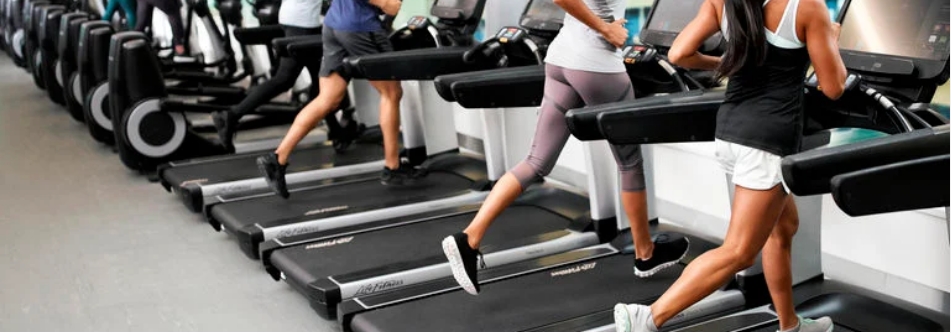
Indoor running presents different conditions compared to outdoor training. Gyms and enclosed spaces may feel warmer, which can sometimes affect breathing comfort. If you’re trying to improve breathing while using a treadmill, these tips may help:
- Maintain an upright posture and avoid leaning excessively forward. Good posture allows your lungs and diaphragm to expand more freely.
- Focus on smooth inhales and controlled exhales to help stabilise your pace and effort level.
- During interval workouts, use walking recovery periods to slow your breathing and regain control.
- Monitoring pace and heart rate through treadmill tracking features can also help you better understand how breathing changes with intensity.
